



















From text
Describe the shape and the movement. Players and lines land on the board.
 No account to draw
https://playdiagram.com is the Play Diagram entry address. It is a free online tactics board: you draw a play on the court in the browser.
Play diagram and playdiagram are a free tactic board and a free online sports tactics board. The board you choose below opens in the browser. Drawing does not need an account. A free account is only for saving.
Opens the basketball court. Free, no account. Open the basketball board
Opens the soccer pitch. This is not American football. Free, no account. Open football diagrams
Opens the NFL field. This is not soccer. Free, no account. Open the American football field
Also searched as lavagna tattica and bảng chiến thuật bóng rổ online. Gratis means the same thing as free: the board opens before an account.
FIBA 28×15m standard
Full-court and half-court views. Half-court sets, pick-and-roll actions, zone defense and after-timeout plays.
Soccer, not American football
Draw a shape on the soccer pitch. Football diagrams are not American football. The pitch opens free, with no account.
Volleyball rotation
Set the 1–6 rotation, setter distribution and 5-1 attack on the same volleyball tactics board.
Federation standards
FIFA 40×20 m court, 6 m penalty area and 10 m mark. Set a 1-2-2, a high press and a power play on the full court.
Federation standards
IHF 40×20 m court, 6 m goal area and 9 m line. Plan a 6-0, a fast break and a wing cross around the goal area.
Federation standards
FIH 91.4×55 m pitch and 14.63 m shooting circle. Draw a 4-3-3, a press and a penalty corner inside the shooting circle.
Federation standards
World Netball 30.5×15.25 m, thirds and goal circle. Plot a centre pass, a wing attack and a circle feed through the thirds.
Federation standards
NFL 120×53.3 yards with the end zone and the red zone. American football routes and coverages, not soccer.
Federation standards
IIHF 60×30 m rink, blue lines and face-off circles. Plan breakouts, forechecking systems and power-play formations on a full ice hockey rink.
Federation standards
World Rugby 100×70 m plus 10 m in-goal. Set a 1-3-3-1, a lineout and an exit kick on the full pitch.
Federation standards
World Aquatics 30×20 m, 2 m and 6 m lines. Arrange a 3-3, an extra-man attack and a 6-on-5 drop in the pool.
Federation standards
IFF 40×20 m, rounded corners and goal crease. Draw a 2-1-2, a break and a power play around the crease.
Federation standards
90 ft diamond. The outfield fence is a coaching measure: 330/400/330 ft. Place a shift, a bunt defense and a cutoff on the diamond.
Federation standards
World Lacrosse 110×60 yards and a 3-yard crease. Set a 2-3-1, a dodge and a clear on the full field.
Federation standards
22-yard pitch and 30-yard circle. The boundary ellipse is a coaching measure. Organize field placements, bowling strategies and match situations on a cricket field.
PlayDiagram is a free online sports tactics board for basketball, football, volleyball, futsal, handball, field hockey, netball, American football, ice hockey, rugby, water polo, floorball, baseball, lacrosse and cricket. Draw on each sport's own surface without an account. A free account saves the diagram.
Position players on sport-specific playing surfaces in seconds. Plan offensive sets, defensive schemes, screening rotations and set pieces with clean vector lines.
Everything syncs across tablet, phone and computer. Draw a tactic on your laptop before practice and walk your players through it from a tablet on game day.
1
Choose your sport. The play diagram opens in the browser on that sport's own surface.
2
Drop your players and the opponent on the same board. The numbers mark who does the job.
3
A line is the pass, the run or the screen. The motion on this page is that drawing, played through once.
4
Name the play when you want to keep it. Drawing works before you sign up. A free account is what stores it online.
Animated play diagrams
Press Play on any drawing and watch runs, passes, dribbles and screens unfold in order. Choose what happens together, set the pace and download it as a video.
Artificial intelligence
After you sign in, the assistant builds, revises and draws the tactic on the board. Drawing stays free without an account.
Describe the shape and the movement. Players and lines land on the board.
Say the same request into the microphone. The command is drawn on the court.
A camera frame or a file is placed on the court as an estimate of the real measurements.
Describe the opponent, see a suggested tactic, and play the frames in order.
One tactics board for every sport
Free tactic board and play diagram for basketball, football, volleyball, futsal, handball and hockey. Draw and export free, no signup required.
Open any sport's tactics board with no signup. The same tactic board is free to draw on. Export is free. A free account is what saves the drawing for later.
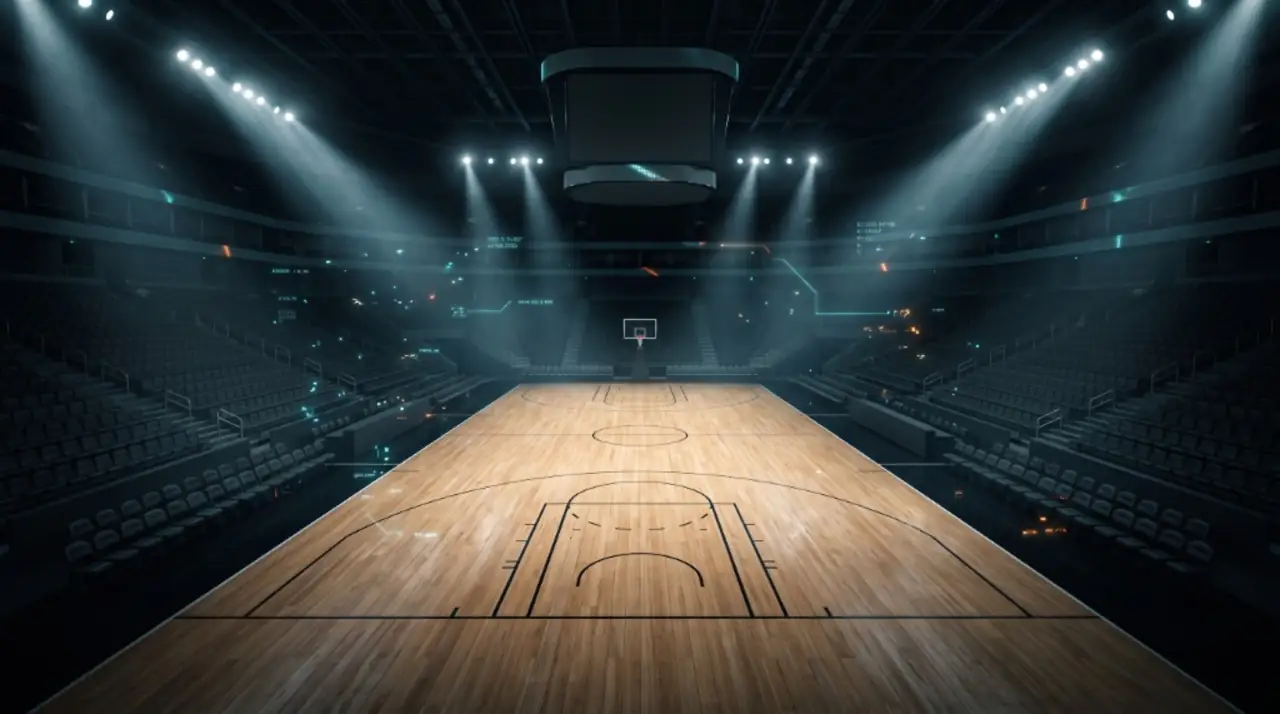
On the FIBA 28×15 court, draw a half-court set, a pick and roll and a full-court transition.
Open the basketball tactics boardSoccer on the 105×68 pitch: a 4-3-3, a corner or a free kick. This is not American football. The pitch opens with no account.
Open the football tactics boardOn the 18×9 indoor court, plan the 1–6 rotation, a 5-1 attack and serve receive.
Open the volleyball tactics boardFIFA 40×20 m court, 6 m penalty area and 10 m mark. Set a 1-2-2, a high press and a power play on the full court.
ExploreIHF 40×20 m court, 6 m goal area and 9 m line. Plan a 6-0, a fast break and a wing cross around the goal area.
ExploreFIH 91.4×55 m pitch and 14.63 m shooting circle. Draw a 4-3-3, a press and a penalty corner inside the shooting circle.
ExploreWorld Netball 30.5×15.25 m, thirds and goal circle. Plot a centre pass, a wing attack and a circle feed through the thirds.
ExploreNFL 120×53.3 yards with the end zone and the red zone. American football routes and coverages, not soccer.
ExploreIIHF 60×30 m rink, blue lines and face-off circles. Plan breakouts, forechecking systems and power-play formations on a full ice hockey rink.
ExploreWorld Rugby 100×70 m plus 10 m in-goal. Set a 1-3-3-1, a lineout and an exit kick on the full pitch.
ExploreWorld Aquatics 30×20 m, 2 m and 6 m lines. Arrange a 3-3, an extra-man attack and a 6-on-5 drop in the pool.
ExploreIFF 40×20 m, rounded corners and goal crease. Draw a 2-1-2, a break and a power play around the crease.
Explore90 ft diamond. The outfield fence is a coaching measure: 330/400/330 ft. Place a shift, a bunt defense and a cutoff on the diamond.
ExploreWorld Lacrosse 110×60 yards and a 3-yard crease. Set a 2-3-1, a dodge and a clear on the full field.
Explore22-yard pitch and 30-yard circle. The boundary ellipse is a coaching measure. Organize field placements, bowling strategies and match situations on a cricket field.
ExploreFederation standards
Draw tactics for basketball, football, volleyball, futsal, handball, hockey and every other sport on the board. No signup is required to draw. A free account is required only when you want to save your work online.
Full-court and half-court views. Half-court sets, pick-and-roll actions, zone defense and after-timeout plays.
Full pitch, half pitch and attacking-third views. 4-3-3 and 3-5-2 shapes, corner routines and counter-attacks.
Official FIVB indoor dimensions, the attack line and rotation zones 1–6. Serve receive, block combinations and setter distribution.
FIFA 40×20 m court, 6 m penalty area and 10 m mark. Set a 1-2-2, a high press and a power play on the full court.
IHF 40×20 m court, 6 m goal area and 9 m line. Plan a 6-0, a fast break and a wing cross around the goal area.
FIH 91.4×55 m pitch and 14.63 m shooting circle. Draw a 4-3-3, a press and a penalty corner inside the shooting circle.
World Netball 30.5×15.25 m, thirds and goal circle. Plot a centre pass, a wing attack and a circle feed through the thirds.
NFL 120×53.3 yards with the end zone and the red zone. American football routes and coverages, not soccer.
IIHF 60×30 m rink, blue lines and face-off circles. Plan breakouts, forechecking systems and power-play formations on a full ice hockey rink.
World Rugby 100×70 m plus 10 m in-goal. Set a 1-3-3-1, a lineout and an exit kick on the full pitch.
World Aquatics 30×20 m, 2 m and 6 m lines. Arrange a 3-3, an extra-man attack and a 6-on-5 drop in the pool.
IFF 40×20 m, rounded corners and goal crease. Draw a 2-1-2, a break and a power play around the crease.
90 ft diamond. The outfield fence is a coaching measure: 330/400/330 ft. Place a shift, a bunt defense and a cutoff on the diamond.
World Lacrosse 110×60 yards and a 3-yard crease. Set a 2-3-1, a dodge and a clear on the full field.
22-yard pitch and 30-yard circle. The boundary ellipse is a coaching measure. Organize field placements, bowling strategies and match situations on a cricket field.
Simple and fast
No design software and no paper clipboard.
Choose your sport and open the tactics board. The official lines for that sport open in one click.
Drag players, draw passes and runs, and mark screens. Color-coded lines show how the play flows.
Name the set, add coach notes, and it is stored in the cloud. Copy, edit and reuse it whenever you need.
A few of the play patterns coaches draw in PlayDiagram:
The 4 and 5 set a double screen at the elbows and the 1 attacks the weak side.
Five players space the perimeter, looking for backdoor cuts and open shooters.
The front three lock onto the centre-backs and midfield squeezes the gaps for the second ball.
Opposite and outside hitters attack according to whether the setter is in the front or back row.
The goalkeeper and two back players hold the defensive half while two players stack through the middle toward the opposition goal. Use it as a balanced starting shape when you want cover behind the ball and a pivot to play into.
Six court players defend the 6 m goal area in front of the goalkeeper, with the two outer defenders slightly higher. Coaches use it to close central gaps against strong back-court shooters.
The goalkeeper, four defenders, three midfielders and three forwards spread across the full pitch. Use it as the base shape before you draw build-up passes or pressing triggers.
All seven positions line up and the centre passes from the centre circle to the wing attack. Use it to set the first options after a goal and the defenders' marking positions.
The quarterback and running back sit in the backfield, the X receiver is wide left and three receivers stack to the right. Use it to overload one side against two corners and two safeties.
The left defenceman passes up the boards to the left wing while the centre supports through the middle. Use it to leave the defensive zone against two forecheckers.
The scrum-half stands at the base, three backs form the first line, the wings spread to the touchlines and the fullback sits deep. Use it to show width and depth before you add forward pods.
Six field players set up in two lines of three in front of goal, with two defenders and the goalkeeper. Use it as the base positions for an even-strength attack.
The goalkeeper, two defenders, a centre and two wings spread over the 40×20 m court. Use it as the starting shape for both build-up and defence.
All nine fielders are placed with the infielders repositioned for the batter's hitting tendency. Under current MLB rules two infielders must stay on each side of second base, so check your league rules.
Six defenders set up with two high, three across and one on the crease against three attackers. Use it as the base shape for settled defence.
The wicketkeeper, two slips and a gully stand behind the batter with the bowler at the crease. Use it for attacking new-ball bowling when edges are likely.
Players, passes, runs, screens and formations on one free board.
Put your players and the defence on the court.
Show the run, the pass and the dribble with an arrow.
Finish the set with a screen, a shot or a free draw.
Undo a wrong step and try it again on the same board.
Name the set and add a category, a description and a coach note.
Search the playbook by sport and category.
Duplicate a tactic and keep the variation as its own play.
The drawing is saved, so closing the board does not wipe the work.
After you sign in, describe a tactic by text or voice, revise it, review the shape, turn a photo into the board, ask for a plan against an opponent, and play the frames in order. Drawing stays free without an account.
Play any tactic in order with step numbers, pace and timing, then show it full screen or download it as a video. No account needed.
Drawing and export are free without an account. A free account is required to save drawings.
Good to know
It is a free coaching tool for opening basketball, football, volleyball, futsal, handball, field hockey, netball, American football, ice hockey, rugby, water polo, floorball, baseball, lacrosse and cricket tactics boards in the browser and drawing players, passes and runs. A tactic is a playbook record you can reopen and edit, not a flat picture.
On the basketball tactics board, choose full court or half court, place the players, then draw the screen and pick-and-roll arrows. Name the set, add a note and save it to your playbook.
Yes. On the football tactics board you can draw a shape such as 4-3-3, plus corner and free-kick routines, on the full pitch, the half pitch or the attacking third.
The volleyball tactics board shows zones 1–6. In a 5-1 you mark where the setter stands and who covers serve receive and attack on that same court.
For practice and game day, yes. A free account keeps the drawing, so it opens on a tablet and can be copied and edited. You do not redraw it from scratch each time.
Drawing and export are free without an account. A free account is required to save drawings.
No. Each account can only view, edit and delete its own tactics.
It runs in the browser. The drawing screen is built for desktop and tablet, and it also opens on a phone.
Yes. Open the board, draw and export with no signup. Create a free account only when you want the drawing saved online. A saved play is visible only to that account.
A free account stores each play with a title, a category, a description and a note. You can copy a saved play and keep the variation separately. That collection stays private to the account. It is not a shared book.
No. PlayDiagram runs in the browser. You draw on a desktop or a tablet, and the board also opens on a phone. On game day you open the tablet and edit the saved set.
Basketball uses a FIBA 28×15 m court, football a UEFA 105×68 m pitch and volleyball an FIVB 18×9 m indoor court. The same board also draws futsal (FIFA 40×20 m), handball (IHF 40×20 m), field hockey (FIH 91.4×55 m), netball, American football, ice hockey (IIHF 60×30 m), rugby union, water polo, floorball, baseball, lacrosse and cricket. Each sport has its own page and ready plays.
A drawing made without an account stays in that browser, so you can export it and continue after you sign up. Once you save it to a free account, it remains in that account.
A signed-in member creates a tactic from text or voice and revises the current one. The assistant lists problems in the shape, tries to adapt a captured or uploaded photo, suggests a plan against an opponent, and plays player movement in order. It does not answer anything outside tactics.
Yes. Press Play on any drawing and the players move in the order you set. Movements run together or one after another, at Walk, Run or Sprint pace. Animation is free without an account.
Yes. Download video saves the animation as an MP4 or WebM file, depending on the browser. Chrome or Edge is recommended.
To confirm the account is yours and to keep password reset secure.